“Heated Debate Takes a Sharp Turn: Woman Defends Islam as Peaceful — Then Gad Saad Asks One Question That Leaves the Room in Stunned Silence”
Democracy, Faith and the Fault Lines of Citizenship
.
.
.
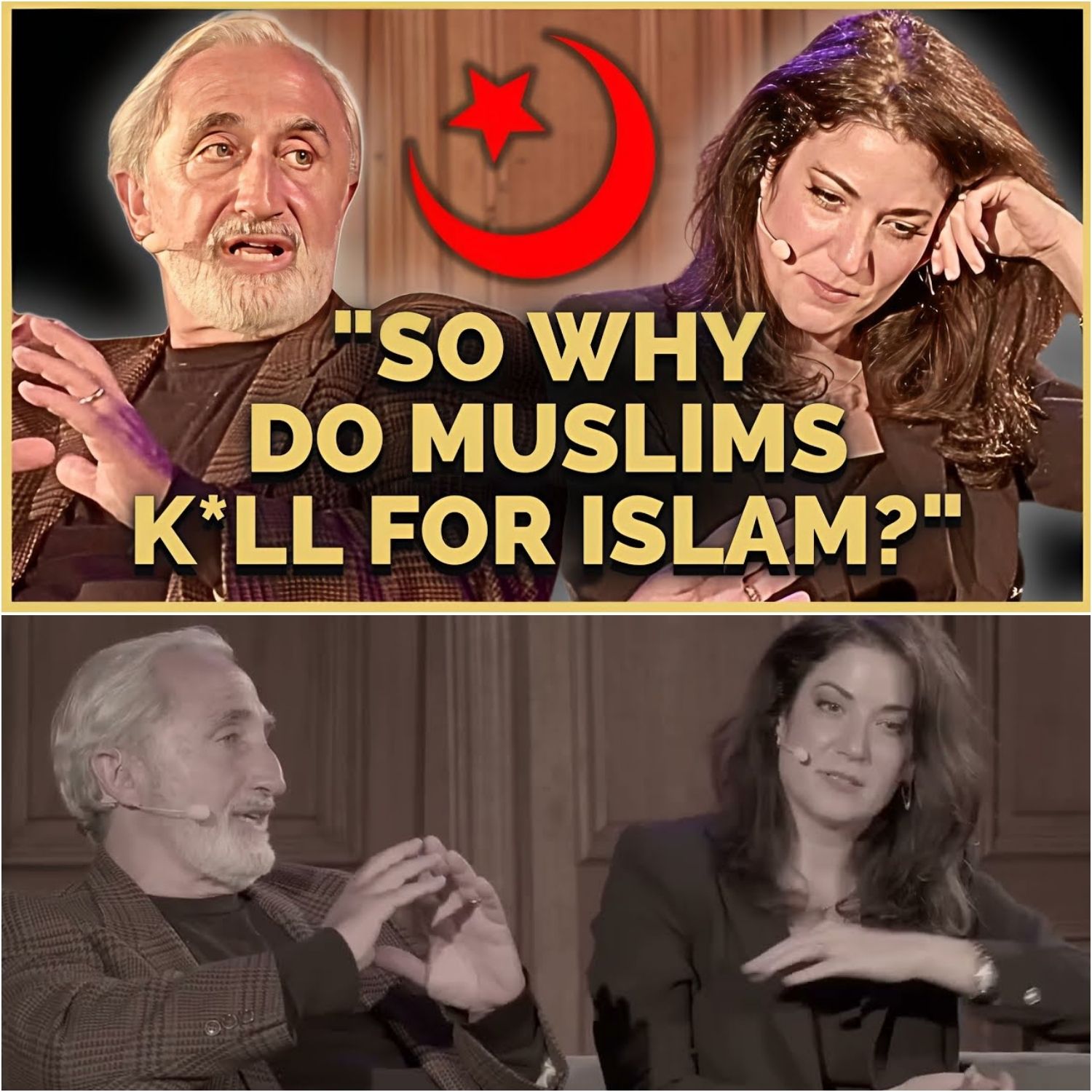
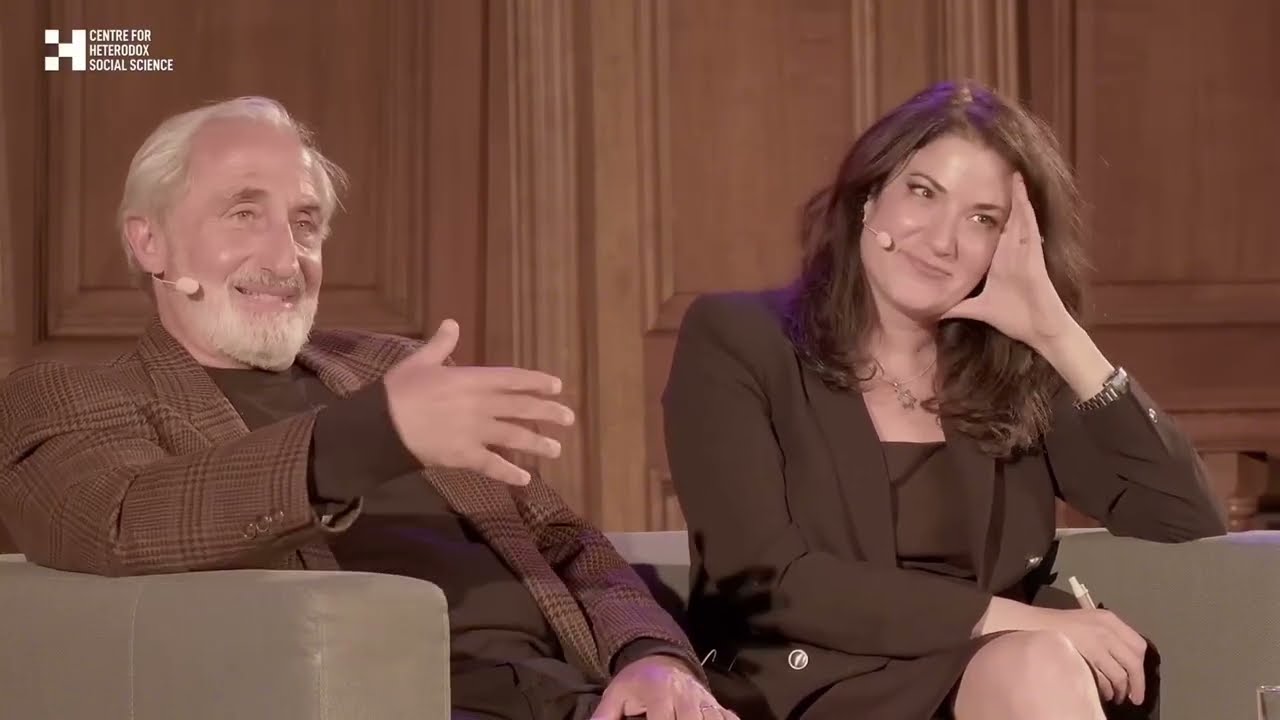
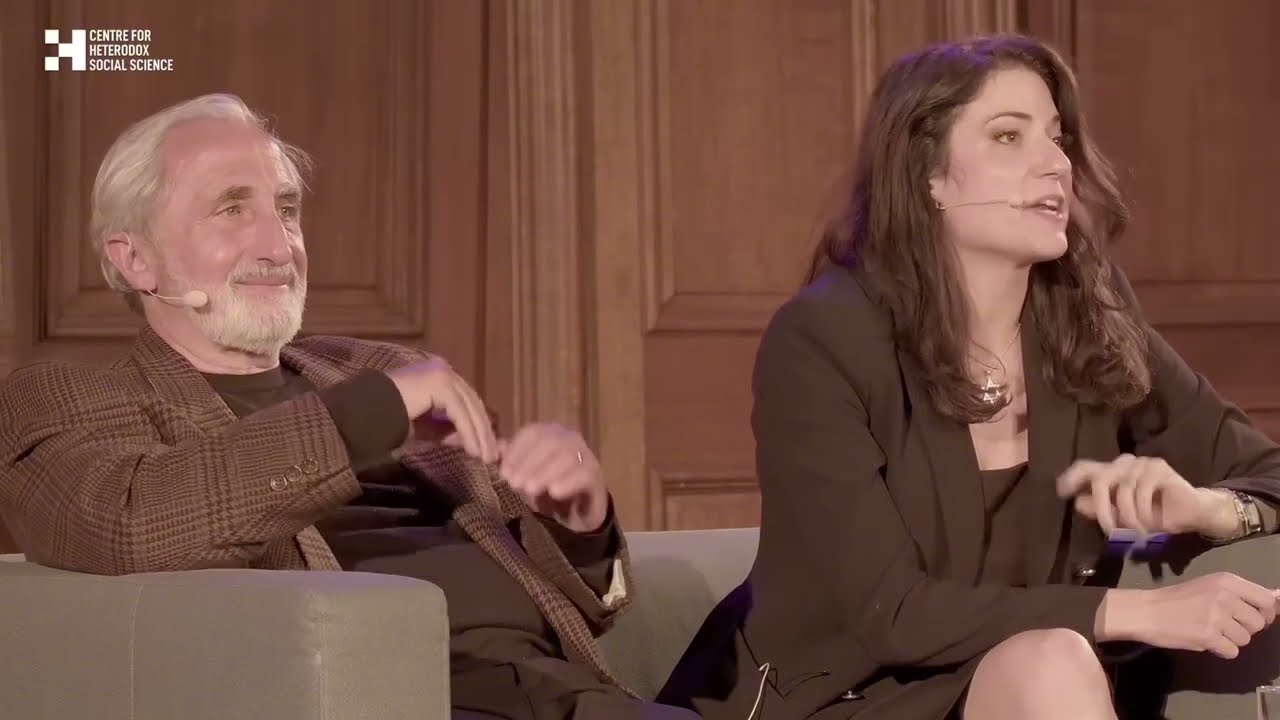
On a recent evening in England, a public forum crackled with the kind of tension more often associated with parliamentary showdowns than academic panels. At the center of the exchange was Gad Saad, the Lebanese-born Canadian psychologist known for his sharp critiques of what he calls “political Islam.”
The topic was as combustible as it was consequential: whether aspects of Islamic law are compatible with Western liberal democracy — and what that means for citizenship in pluralistic societies.
What unfolded was less a tidy debate than a vivid snapshot of a broader Western anxiety: How far can tolerance stretch before it collides with the foundational principles of equal justice under law?
The Core Question: Can Democracy Revoke Belonging?
The exchange opened with a stark warning: A democracy, one participant argued, ceases to be a democracy if it strips people of citizenship because of their ideas.
That line set the tone. Beneath the specific references to Islam and Sharia lay a deeper philosophical divide. Is citizenship sacred and inviolable? Or can certain ideologies place someone at odds with the civic compact that citizenship represents?
Saad took an unequivocal stance. Citizenship, he argued, is not a privilege contingent on ideological conformity. It is a legal status that forms the bedrock of democratic society. If governments begin revoking that status over belief, he warned, they risk dismantling democracy itself.
Sharia and the Principle of Equal Justice
A Clash of Legal Philosophies
The debate sharpened when the conversation turned to Sharia, or Islamic law. One speaker claimed that traditional interpretations of Sharia prescribe different punishments depending on the religious identity of victim and perpetrator — an idea fundamentally at odds with Western legal norms.
Western justice systems are symbolized by Lady Justice, blindfolded to signify impartiality. The law, in theory, does not see race, religion or status. Critics argue that if a legal framework differentiates between Muslims and non-Muslims in criminal punishment, it conflicts directly with that principle.
Saad framed the issue analytically: If a legal system conditions justice on identity, it contradicts the liberal democratic ideal of equality before the law.
Religion or Politics?
But Saad was careful to draw a distinction. He rejected the idea that Muslims as people are incompatible with the West. In fact, he noted, he might share more common ground with a secular Muslim than with a religious fundamentalist of any faith.
For him, the issue is not personal piety but political ideology. “It’s a political problem, not a religious problem,” he argued — suggesting that when religious doctrine becomes a political blueprint, tension with liberal democracy intensifies.
The British Context: Crime, Cohesion and Cultural Strain
The conversation took on sharper edges when audience members cited British-specific controversies. References were made to grooming gang cases involving men of Pakistani origin, as well as polling data suggesting troubling attitudes toward Hamas among segments of British Muslims following the October 7 attacks.
These claims — highly sensitive and deeply contested in public discourse — were offered as evidence that integration challenges in the United Kingdom differ from those in the United States.
For critics in the room, the issue was not theoretical compatibility but lived experience: criminal cases, community tensions and what some described as official reluctance to confront cultural factors for fear of appearing discriminatory.
Saad’s response returned to first principles. Criminal overrepresentation, he argued, does not negate citizenship. Every society contains subgroups disproportionately represented in crime statistics; stripping citizenship based on collective association would undermine democratic equality.
Inheritance vs. Citizenship: Who Truly “Owns” a Nation?
A “Guest” in One’s Own Country
One of the most emotionally charged moments came when a participant described himself as part of a “guest community” in England. The country, he suggested, belonged by inheritance to the English. Immigrants remained at the preference of the host population.
Citizenship, in this framing, was secondary to historical ownership.
Saad reacted with visible discomfort. The idea that a citizen would consider himself a guest because of his religion struck him as tragic. In his view, liberal democracy rests precisely on rejecting blood-and-soil definitions of belonging.
The American Contrast
Drawing implicitly on the American model, Saad emphasized that citizenship in the United States is meant to supersede religious identity. If someone made a Jewish citizen feel like a permanent outsider, he suggested, it would represent a moral failure of the system itself.
Here, the debate exposed a fault line between two conceptions of nationhood:
One rooted in heritage and inheritance.
The other grounded in legal equality and civic participation.
The Talmud Comparison and the Question of Imposition
At one point, a critic interjected that problematic passages could also be found in the Talmud. Saad dismissed the equivalence, arguing that Jewish communities in Western societies do not seek to impose Talmudic law on broader civil systems.
He referenced a traditional rabbinic principle often summarized as “the law of the land is the law” — suggesting that Jewish jurisprudence, in practice, defers to secular authority in diaspora contexts.
Whether the same can be said of all interpretations of Islamic jurisprudence remains a matter of debate. Many Muslim scholars insist that Sharia is not a rigid code but a diverse, evolving tradition compatible with secular governance. Islamist movements, however, explicitly advocate integrating religious law into state systems.
The friction, then, may lie less in scripture than in political ambition.
Lebanon, Memory and the Weight of Experience
Though not central to the formal arguments, Saad’s biography hovered over the evening. Born in Lebanon, he has spoken frequently about growing up amid sectarian conflict and the displacement of Christian and Jewish communities during the civil war.
Those experiences inform his suspicion of political movements that merge religion and state power. Critics argue that extrapolating from Lebanon’s history to Western democracies risks oversimplification. Supporters contend that lived experience offers hard-earned clarity.
The Unanswered Question
As the discussion wound down, no consensus emerged. Instead, what lingered was a series of unresolved questions:
Can liberal democracies tolerate ideologies that challenge their foundational norms?
Where is the line between religious freedom and political incompatibility?
Is citizenship an unconditional right, or does it carry cultural expectations beyond legal status?
The evening did not resolve these tensions. But it illuminated the stakes.
Democracy depends on equal protection under the law — and on the shared belief that fellow citizens are bound by the same civic rules. When doubts arise about that shared commitment, the anxiety runs deeper than any single controversy.
In England that night, the clash was not merely about Islam or Sharia. It was about the meaning of belonging in societies that are at once diverse and determined to remain democratic.
News
🚨“U.S. Senator Under Fire: Kelly Slammed by Critics for Questioning Trump’s Iran Strikes as War Powers Debate Erupts Across America”
🚨“U.S. Senator Under Fire: Kelly Slammed by Critics for Questioning Trump’s Iran Strikes as War Powers Debate Erupts Across America” Democratic Lawmakers Split With White House After U.S.–Israel Strikes on Iran Washington, D.C. — A sweeping U.S.–Israeli military operation targeting…

BREAKING: U.S. Labels Iran “State Sponsor of Wrongful Detention” as Tensions Soar — Marco Rubio Issues Stern Warning Over American Detainees and Escalating Middle East Conflict
BREAKING: U.S. Labels Iran “State Sponsor of Wrongful Detention” as Tensions Soar — Marco Rubio Issues Stern Warning Over American Detainees and Escalating Middle East Conflict U.S. Accuses Iran of Detaining Americans as Tensions Reach Boiling Point Washington, D.C. —…

“Tensions Erupt at U.S. City Hall: Heated Debate Over Islamic Influence in Local Politics Leaves Officials Under Intense Public Scrutiny”
“Tensions Erupt at U.S. City Hall: Heated Debate Over Islamic Influence in Local Politics Leaves Officials Under Intense Public Scrutiny” Confrontation in Dearborn: Free Speech, Policing and a City Under Scrutiny On a recent afternoon in Dearborn, a confrontation between…

Oğlu, annesinin mezarının açılmasını ŞİDDETLE TALEP ETTİ. Ve tabut açıldığında POLİS çağrıldı
Oğlu, annesinin mezarının açılmasını ŞİDDETLE TALEP ETTİ. Ve tabut açıldığında POLİS çağrıldı Berlin’in dar, loş bir sokağındaki küçük dairesinde, Tuncay Karadeniz sabah kahvesini yudumluyordu. Soğuk bir Kasım günüydü. Pencereden süzülen soluk ışık, masanın üzerindeki pasaportu ve annesinin son doğum gününde…

Milyoner, annesini evsiz bir gence yaslanmış görünce donup kaldı… sonra onlara doğru koştu
Milyoner, annesini evsiz bir gence yaslanmış görünce donup kaldı… sonra onlara doğru koştu İstanbul’un kalbi, Taksim Meydanı’nın hareketli uğultusu. Her yer Aralık ayının keskin, soğuk ışığıyla yıkanıyordu. Siyah, zırhlı bir Mercedes Sınıfı, kırmızı ışıkta beklerken, içeride Kemal Demir oturuyordu. Daha…

Öğretmen, öğrencinin saçını sınıfta görünce hemen kesti. Sonrasında yaşananlar ise herkesi şok etti
Öğretmen, öğrencinin saçını sınıfta görünce hemen kesti. Sonrasında yaşananlar ise herkesi şok etti Sabah güneşi lise sınıfını aydınlatıyor ve yere yansıyordu. Kız sessizce masasında oturmuş, resim çiziyor ve dersin başlamasını bekliyordu. Uzun, kıvırcık saçları onun için özeldi; ona her…
End of content
No more pages to load